
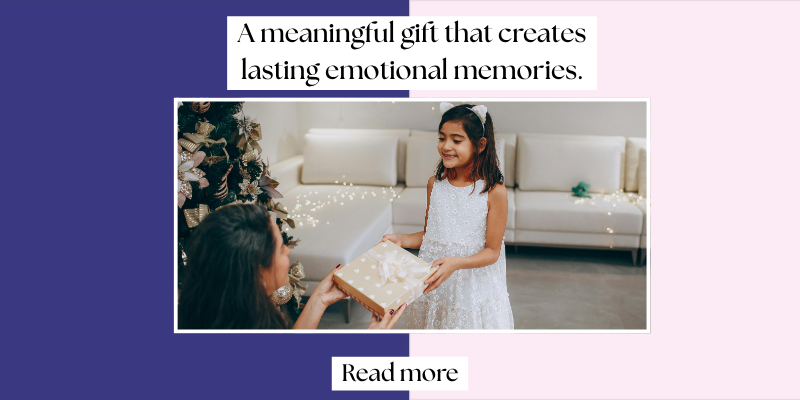
Some gifts become more memorable because they connect with the recipient’s preferences, emotions, relationships, or experiences. Research suggests that emotional arousal can strengthen certain memories, expensive gifts do not necessarily produce greater appreciation, and experience-based gifts can strengthen relationships particularly well. In other words, the most memorable gift is not always the biggest or most expensive one. It is often the one that feels relevant, meaningful, and connected to the person receiving it.
Have you ever received a gift that you still remember years later?
Maybe it was something simple: a book from a close friend, a small keepsake connected to an inside joke, tickets to an event you had always wanted to attend, or even something inexpensive that showed someone had been paying attention.
That is what makes gift-giving so interesting. A gift can be physically small but emotionally significant.
The psychology of gift giving helps explain why some presents become part of our memories while others are quickly forgotten. The object itself matters, but so do the emotions surrounding it, the relationship between the giver and recipient, and how well the gift fits the recipient’s actual preferences.
Why Are Some Gifts More Memorable Than Others?
A useful starting point is emotion.
Research on memory has consistently found that emotional arousal can influence the consolidation of memories, meaning emotionally significant experiences can sometimes become more strongly stored than neutral ones. That does not mean every emotional experience is remembered perfectly, but emotion can make certain parts of an experience more memorable.
This helps explain why receiving a meaningful gift can stick in your mind.
Think about the difference between opening a package with no particular emotional connection and receiving something that makes you laugh, cry, feel understood, or remember an important moment.
The physical item may be similar in value, but the emotional experience is completely different.
That emotional reaction becomes part of the memory.
The Price Tag Is Not the Whole Story
One of the most common assumptions about gifting is that a more expensive gift must be a better gift.
Research does not support that simple idea.
Studies on gift-giving have found that givers can overestimate how much recipients care about a gift’s price or how it compares with other gifts. In one line of research, gift-givers consistently overestimated the extent to which recipients’ appreciation would depend on price, while recipients did not show the same strong price-based reaction.
Another study found that givers often overestimate the importance of a gift’s relative value compared with other gifts. Recipients tend to care more about thoughtfulness than the giver may realize.
That does not mean price never matters. A quality product can obviously be useful and appreciated. The point is that price alone is a poor shortcut for emotional value.
A $30 gift chosen because it genuinely fits someone’s interests can feel more meaningful than a $150 gift selected mainly because it looks impressive.
What Makes a Gift Feel Thoughtful?
A thoughtful gift usually starts with understanding the recipient.
That can mean noticing what they use every day, remembering something they mentioned, understanding their hobbies, or recognizing what they currently need.
The best question is not:
“What is the most impressive thing I can buy?”
It is:
“What would actually make sense for this person?”
Gift-giving research shows an important difference between the way givers think about gifts and the way recipients evaluate them. Givers can focus heavily on what a gift communicates about the relationship, while recipients may care more about whether the gift is genuinely useful, enjoyable, or suited to their preferences.
That is why relevance matters.
A person who loves cooking may appreciate a useful kitchen upgrade. A reader may prefer a book they genuinely want. A busy friend might value something that saves time. Someone who dislikes clutter may prefer an experience over another object.
Thoughtfulness is often less about adding more meaning to a gift and more about choosing something that already fits the person.
Why Experiences Can Become Powerful Gifts
Some of the strongest evidence in gift psychology comes from research on experiences.
Experiential gifts include things such as concert tickets, a cooking class, a weekend trip, a special dinner, or another event someone can experience rather than simply keep.
A study published in the Journal of Consumer Research found that experiential gifts produced greater improvements in relationship strength than material gifts. The researchers linked this effect to the intensity of emotion people experienced while consuming the experience.
That finding makes intuitive sense.
A physical object can sit on a shelf. An experience creates a story.
You may remember who you went with, what happened, how you felt, what made you laugh, or what surprised you. Those details can become part of the shared history between two people.
That is one reason experience-based gifts can be especially effective when the real goal is connection.
A Gift Can Become a Memory Trigger
Some objects become meaningful because they remind us of a person or a moment.
A photograph can bring back a vacation. A piece of jewelry can remind someone of an anniversary. A book can make them think of the friend who recommended it. A small object from a memorable trip can suddenly bring an entire period of life back to mind.
The object is acting as a kind of reminder.
The psychology of memory helps explain why this can be powerful. Emotionally significant experiences can influence memory consolidation, so objects associated with those moments may later become cues that bring the memory back to mind.
This does not mean every sentimental object becomes a treasured keepsake.
Meaning still depends on the person.
That is why blindly adding names, dates, or initials to a product is not automatically the same thing as meaningful personalization. A personal detail works best when it actually connects to the recipient.
Giving Can Feel Good for the Giver Too
There is another side to gift-giving that is easy to overlook: the giver can benefit emotionally as well.
A systematic review of research on prosocial spending found a generally positive relationship between spending money on others and individual happiness, although the size and conditions of the effect can vary.
In everyday life, that might be as simple as seeing someone’s reaction when they receive something you carefully chose.
You are not only buying an object.
You are participating in an interaction that can communicate appreciation, affection, encouragement, celebration, or gratitude.
That social meaning is part of what makes giving different from an ordinary purchase.
Why Choosing a Gift Can Be Surprisingly Difficult
Gift-giving sounds simple until you actually have to choose something for someone.
You may start wondering:
- Will they actually like it?
- Do they already have something similar?
- Is it too expensive?
- Is it personal enough?
- Is it right for our relationship?
- Would they rather have something practical?
- What if they secretly dislike it?
Research on gift-giving shows that givers can sometimes put too much pressure on themselves when predicting how a recipient will react. They may worry about choosing the perfect gift or overestimate the consequences of choosing badly.
That pressure can lead to another common mistake: choosing a gift based on what looks impressive instead of what actually suits the recipient.
The better approach is to reduce the decision to a few useful signals.
A Simple Framework for Choosing a Meaningful Gift
Before you start shopping, answer these five questions.
1. What does this person actually enjoy?
Think about hobbies, routines, interests, and preferences you have observed rather than relying only on stereotypes.
2. What do they use or need?
A practical gift can still be deeply thoughtful when it solves a real problem or improves something they already do.
3. What kind of relationship do you have?
A gift for your partner can communicate something very different from a gift for a colleague or acquaintance.
4. Would an experience be better than an object?
When someone already has plenty of things, an experience may create more value and a stronger shared memory. Research suggests experiences can be particularly effective at strengthening relationships.
5. What is the message behind the gift?
Maybe the message is “I appreciate you,” “I know what you like,” “I’m proud of you,” or simply “I was thinking about you.”
Once you know the message, choosing becomes much easier.
How to Make an Ordinary Gift More Meaningful
You do not always need to spend more money to make a gift feel special.
- A short note can explain why you chose something.
- A gift can be connected to a shared memory.
- You can pair a physical present with an experience.
- You can choose something the recipient has already mentioned wanting.
- Or you can select something that fits naturally into their everyday life.
- The important part is not adding random sentimental details. It is adding relevance.
- That is what turns a generic purchase into a gift that feels considered.
What Gift-Giving Research Teaches Us
When you look at the research as a whole, a few practical lessons stand out.
First, price is not a reliable measure of appreciation. Givers can overestimate the importance of cost, while recipients often respond strongly to thoughtfulness and fit.
Second, emotional experiences can matter. Emotional arousal can strengthen aspects of memory, which helps explain why emotionally significant moments can stay with us.
Third, experiences can be powerful relationship gifts. Research has found that experiential gifts can strengthen relationships more than material gifts.
Finally, giving can benefit the giver too. Research on prosocial spending generally finds a positive relationship between giving to others and happiness.
Put simply, the strongest gift is often not the one with the highest price or the biggest reaction at the moment of unwrapping.
It is the one that makes sense for the person.
Frequently Asked Questions
What makes a gift memorable?
A gift is more likely to become memorable when it is connected to the recipient’s preferences, emotions, relationships, or an important experience. Emotional experiences can also influence how strongly memories are consolidated.
Does an expensive gift make people happier?
Not necessarily. Research suggests gift-givers often overestimate how strongly recipients’ appreciation depends on price. A more expensive gift is not automatically a more appreciated gift.
Are experiences better gifts than physical gifts?
Not in every situation, but research has found that experiential gifts can strengthen relationships more effectively than material gifts, partly because of the emotions associated with experiencing them.
What makes a gift thoughtful?
A thoughtful gift fits the recipient. It reflects something you know about their interests, preferences, needs, lifestyle, or relationship with you. Thoughtfulness is about relevance, not simply spending more.
Why do people remember sentimental gifts?
Sentimental gifts are often tied to emotionally meaningful people, moments, or experiences. Because emotional arousal can influence memory consolidation, these associations may help make the overall experience more memorable.
How can I choose a meaningful gift?
Start with the recipient rather than the product. Consider their interests, everyday routines, preferences, your relationship, the occasion, and whether an experience might be more appropriate than another physical item.
Thoughtful Gifting Starts With Knowing the Person
Gift-giving is often treated like a shopping problem, but it is really a people problem.
The challenge is not finding the most expensive product, the trendiest item, or the most unusual surprise.
It is understanding who you are buying for.
A memorable gift can be useful, funny, sentimental, practical, or experiential. What matters is that it connects with something real about the recipient.
That is also where AI-powered gift discovery can be useful. Instead of starting with thousands of generic products, you can start with the person their interests, personality, relationship to you, occasion, and budget and use that information to narrow the choices.
GiftsAI is built around exactly that idea: start with the recipient, not the product.
Leave a Reply