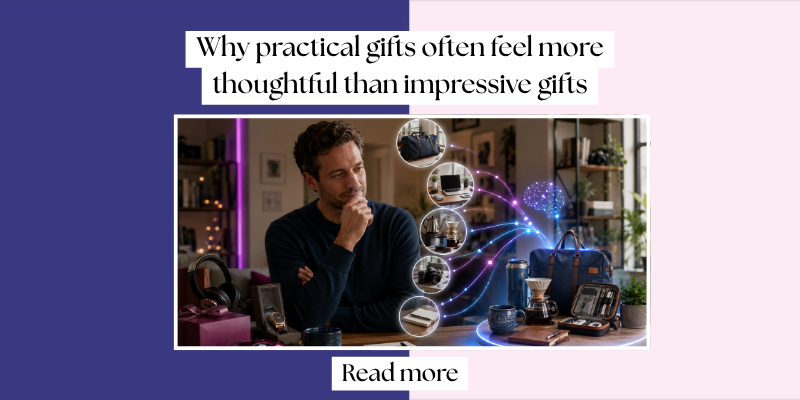
The best useful gifts are not simply things someone needs. They are things that make sense for the person receiving them. A practical item can miss the mark when it solves a problem they never cared about, ignores their preferences, or feels more like an errand than a gift. The key is to find something useful because it suits the person, not simply because it serves a purpose.
A useful gift should make someone’s life a little easier without making them wonder why you thought they needed it.
That distinction matters.
Gift shopping often creates pressure to find something impressive, sentimental, or completely unexpected. But practical gifts have their own appeal. They can save time, replace something worn out, support a hobby, or make an everyday routine more enjoyable.
The problem starts when “useful” becomes the only reason for choosing something.
Why Useful Gifts Sometimes Feel Thoughtless
A practical gift usually has a clear purpose. That is also what can make it feel impersonal.
Imagine someone giving you a household item simply because they know you need one.
You may use it every day.
But you might not feel particularly seen by it.
The difference often comes down to whether the gift reflects the recipient or just their circumstances.
A useful gift says, “This will help.”
A thoughtful useful gift says, “I know you, and I think this will help you.”
That small difference changes how the gift feels.
A practical gift becomes more meaningful when there is a reason behind the choice. Maybe you noticed that their old one was falling apart. Maybe they mentioned struggling with something during a conversation. Maybe you know they spend a lot of time traveling, reading, cooking, working, or exercising.
The item itself might be ordinary.
The thought behind it is not.
The Best Useful Gifts Start With the Person
Before asking what someone needs, look at how they actually live.
- What do they do regularly?
- What do they complain about?
- What do they enjoy?
- What are they always replacing?
- What small inconvenience have they learned to tolerate?
These details can turn a generic practical gift into something much more personal.
1. Find a Real Need
The strongest practical gifts often solve a problem the recipient already knows they have.
Maybe their work bag is uncomfortable. Their travel bottle leaks. Their kitchen tool is difficult to use. Their desk setup is cramped. Their headphones keep cutting out.
You do not have to invent a problem.
Pay attention to the ones that already exist.
If someone has casually complained about something several times, that can be a better gift clue than a long list of popular gift ideas.
2. Match Their Preferences
Two people can need the same thing and want completely different versions of it.
One person may prefer simple and minimal.
Another may love colorful designs.
Someone might care about durability while someone else cares more about portability or appearance.
The usefulness of a gift depends partly on whether the recipient will actually enjoy using it.
If you know someone always chooses neutral colors, buying them something bright and flashy simply because it is practical may not work. Likewise, a person who loves design and personalization may not appreciate a completely generic version of something they use every day.
3. Improve Something They Already Do
You do not always have to introduce a new habit.
Sometimes the best gift makes an existing routine better.
A reader might appreciate a comfortable reading light.
A coffee lover might enjoy better beans or an accessory that fits their morning routine.
A frequent traveler might value something that makes packing easier.
Someone who works from home might appreciate something that makes their desk more comfortable.
The gift works because it connects to something already part of their life.
4. Leave Room for Enjoyment
Not every useful gift needs to be purely functional.
The best ones can be practical and enjoyable at the same time.
A soft blanket can keep someone warm and make their evenings more comfortable.
A beautiful notebook can be useful while still feeling exciting to open.
A good travel bag can solve a problem while also reflecting someone’s style.
Useful does not have to mean boring.
The goal is to find the overlap between something they can use and something they will genuinely appreciate receiving.
Use the THOUGHT Test Before Buying a Practical Gift
A simple test can help you decide whether a useful gift also feels personal.
- T | True need: Does this solve something they genuinely need or want?
- H | Habits: Does it fit something they already do?
- O | Own preferences: Does it match their taste and lifestyle?
- U | Useful repeatedly: Will they use it more than once?
- G | Gift-worthy: Does it still feel enjoyable to receive?
- H | “How did you know?”: Could the recipient understand why you specifically chose it?
- T | Thought behind it: Is there a reason beyond “they probably need one”?
A gift that passes these questions is more likely to feel thoughtful instead of merely practical.
You do not need every answer to be perfect. But if you cannot explain why this particular person would appreciate this particular item, you may be choosing based on the product rather than the recipient.
When Practical Gifts Work Especially Well
Useful gifts can be a great choice in situations where the recipient has specific needs or routines.
For Someone Starting a New Job
Think about what their new routine actually involves.
A commuter may need something different from someone working from home. Someone starting an office job might appreciate a practical desk accessory, while someone with a long commute may benefit from something that makes traveling more comfortable.
The key is to understand the routine first.
For Someone Moving
Practicality can be valuable when someone is setting up a new home, but avoid assuming that every household item makes a good gift.
Choose something that reflects their lifestyle or fills a gap they have mentioned.
For example, someone who loves hosting might appreciate something that supports entertaining, while someone who enjoys quiet evenings may prefer something that makes their space more comfortable.
For Frequent Travelers
Travel-related gifts work best when they solve a problem the person actually encounters.
A compact organizer may be useful to one traveler, while someone else may already have more travel accessories than they need.
Think about how they travel, not simply the fact that they travel.
For Someone Who Is Difficult to Shop For
Practical gifts can be especially helpful here.
Start with something they use frequently and look for a better, more enjoyable, or more convenient version.
When you know someone’s routine well, you may actually have more gift clues than you realize.
The Problem With “They Need It”
There is an important difference between needing something and wanting to receive it as a gift.
Someone may need new socks.
They may need cleaning supplies.
They may need a replacement household item.
They may genuinely need all of these things, but that does not automatically make them exciting to unwrap.
This does not mean practical gifts are bad.
It simply means the experience of receiving the gift matters too.
If you are giving something extremely practical, consider adding a small element of personality.
Pair it with something they enjoy.
Choose a version that reflects their taste.
Add a note explaining why you picked it.
Make the practical thing feel like it was chosen, not assigned.
That extra layer is often what separates a useful purchase from a thoughtful gift.
How to Make a Useful Gift Feel More Thoughtful
You do not need to turn every practical gift into an elaborate gift box.
Small changes can make a difference.
Pair It With Something Enjoyable
A useful item plus something connected to their interests can feel more complete.
Think of a practical travel organizer with a small travel-related accessory, or a notebook paired with a pen they would actually enjoy using.
The second item does not have to be expensive. It simply adds another clue that you were thinking about the person.
Choose Quality Where It Matters
You do not have to buy the most expensive option.
But if the recipient uses something every day, choosing a version that is comfortable, durable, or better designed can make the gift feel more considered.
A small upgrade to something they already use can sometimes be more appreciated than a completely new product.
Explain Your Choice
A short message can provide the missing emotional connection.
For example:
“I know you’ve been carrying your old one everywhere, so I thought this might make your commute a little easier.”
Now the recipient knows you noticed.
The explanation gives context to the gift and makes the choice feel intentional.
Make the Presentation Intentional
Even a practical item can feel like a gift when it is wrapped nicely or presented alongside something meaningful.
The goal is not luxury.
It is intention.
You are showing that you took the time to choose and present something specifically for them.
Useful vs. Thoughtful: The Difference
Consider two gifts.
Someone gives their friend a generic water bottle because “everyone needs one.”
Another friend notices that the person goes hiking every weekend and keeps complaining about their old bottle leaking. They choose a durable bottle suited to outdoor use.
Both gifts are useful.
Only one clearly demonstrates attention.
The difference is not the product. It is the reasoning behind the choice.
This is why a simple gift can sometimes feel more meaningful than a more expensive one.
The recipient can recognize themselves in the choice.
How GiftsAI Can Help You Find a Useful Gift That Still Feels Personal
The challenge with practical gifts is finding the right balance between usefulness and personality.
GiftsAI can help narrow gift ideas using recipient details, interests, preferences, occasion, and budget.
Instead of starting with a category like “useful gifts,” you can start with the person.
- What do they enjoy?
- What do they use?
- What is their lifestyle like?
- What are their preferences?
- What fits your budget?
That context can help turn a broad search into a smaller set of ideas that are both practical and relevant.
The goal is not simply to find something they can use.
It is to find something they will want to use.
A Five-Minute Practical Gift Check
Before buying a useful gift, ask yourself:
- What does this person actually use regularly?
- Is there a problem this gift solves?
- Do I know they would like this particular style or version?
- Would they enjoy receiving it, not just using it?
- Can I explain why I chose it specifically for them?
If the only answer you have is, “They need one,” take another look.
If you can say, “They use this all the time, theirs is worn out, and I know exactly what style they prefer,” you are probably much closer.
That is the difference between shopping for a category and shopping for a person.
Frequently Asked Questions
Are useful gifts thoughtless?
Not at all. Useful gifts can be extremely thoughtful when they reflect the recipient’s actual needs, habits, interests, and preferences. The problem is choosing something simply because it is practical.
How do I make a practical gift feel more personal?
Choose a version that matches the recipient’s taste, connect it to something they enjoy, pair it with a small complementary item, or explain why you chose it.
What makes a useful gift feel impersonal?
A gift can feel impersonal when it is generic, solves a problem the recipient does not care about, ignores their preferences, or feels like an ordinary household purchase rather than something chosen for them.
Should I give someone something they need or something they want?
Ideally, look for an overlap. A gift is often strongest when it solves a real need while also being something the recipient will enjoy having.
Can an inexpensive useful gift still feel thoughtful?
Yes. Price is not what creates thoughtfulness. A modest gift that fits someone’s routine and preferences can feel much more personal than an expensive item chosen without much consideration.
How do I choose a useful gift for someone I don’t know well?
Stick to what you genuinely know about them. Their work, hobbies, routines, or general preferences can give you useful clues. When information is limited, flexible and low-risk options are usually safer.
Can GiftsAI help me find practical gifts?
Yes. GiftsAI can use information about the recipient, their interests, preferences, occasion, and budget to narrow down relevant gift ideas. You can then choose the option that best fits what you know about the person.
The Most Useful Gift Is the One That Feels Like It Was Chosen
Useful gifts get a bad reputation when practicality becomes an excuse not to think about the person.
But a practical gift can be incredibly meaningful.
The difference is simple.
Do not just ask what they need.
Ask what would make their life a little better.
Notice what they use. Remember what they mention. Pay attention to their routines. Think about what they enjoy.
Then choose something that fits.
A gift does not need to be sentimental to be thoughtful, and it does not need to be expensive to be useful.
The best practical gifts do two things at once: they solve a real problem and remind the recipient that you know them well.
Start with the person, not the product. Use GiftsAI to discover useful gift ideas that fit their interests, preferences, occasion, and your budget.