
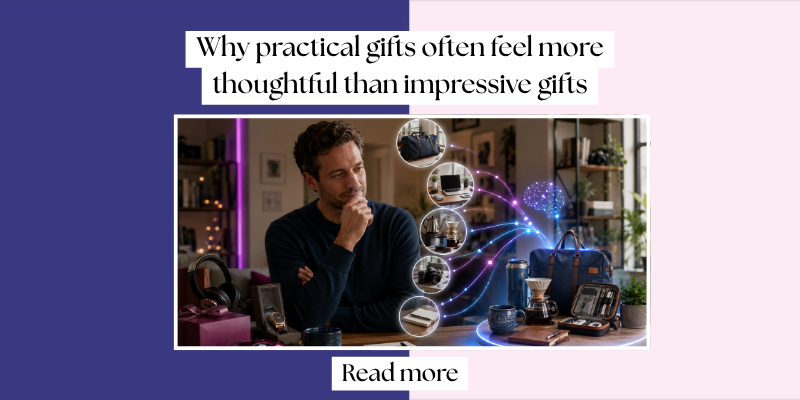
A practical gift feels thoughtful when it fits the recipient’s real routines, solves a specific problem, or improves something they already use. Start with the person’s habits, not a product category. Then choose an option that is relevant, easy to use, and personal enough to show why you selected it for them.
Picture two gifts. One looks impressive in the moment but is quietly stored away a week later. The other is something the recipient reaches for every morning, takes on every trip, or uses to make an annoying part of the day easier.
Which one was more thoughtful?
Many gift-givers assume usefulness makes a present feel boring. That belief pushes people toward flashy, surprising, or highly unusual gifts, even when the recipient would be happier with something practical. The result is often an expensive object that creates a good unboxing moment but no lasting value.
A practical gift does not have to feel impersonal. The best useful gifts communicate something specific: “I notice how you live, I remember what matters to you, and I chose something that fits.”
Why Practical Gifts Often Work Better Than Impressive Ones
Gift-givers and recipients do not always judge the same present in the same way. Givers naturally focus on the moment of exchange. They imagine the surprise, the reaction, and how exciting the gift will appear when it is opened.
Recipients live with the gift afterward. They experience whether it is convenient, easy to use, suited to their preferences, and worth keeping.
Research published in the Journal of Consumer Research found that givers tend to favor more desirable or impressive options, while recipients place more value on feasibility and practicality. In one example, givers preferred a higher-rated restaurant farther away, while recipients preferred the more convenient restaurant nearby.
The lesson is not that every gift should be purely functional. It is that convenience, usefulness, and fit are part of thoughtfulness, not the opposite of it.
What Makes a Practical Gift Feel Personal?
A random household item is not automatically thoughtful just because it can be used. Practical gifts become meaningful when the usefulness is connected to a real detail about the recipient.
It reflects an existing habit
The safest practical gifts support something the person already does. A frequent traveler may appreciate an upgrade to an item they carry on every trip. Someone who cooks every weekend may value a better version of a tool they regularly reach for. You are not assigning them a new personality; you are supporting the life they already have.
It solves a frustration you actually noticed
Small complaints are often excellent gift clues. “My charger never reaches the couch.” “I can never keep this organized.” “I wish this were easier to clean.” A gift that removes a recurring annoyance shows attention because it is based on observation, not guesswork.
It feels like an upgrade, not an errand
There is a difference between replacing a basic necessity and giving a nicer version of something the recipient would enjoy but might not buy for themselves. The sweet spot is useful with a touch of comfort, quality, design, or indulgence.
It suits their preferences, not yours
A practical gift can still miss when it reflects the giver’s habits instead of the recipient’s. The person who loves elaborate coffee may be excited by a specialized accessory. The person who wants coffee ready in seconds may see the same gift as extra work. Usefulness is personal.
The “Use, Repeat, Relief” Test
Before buying, run the idea through this simple three-part test. It turns a vague feeling about a product into a clearer decision.
- Use: Does it fit their real life?
Imagine where, when, and how the person would use the gift. If you cannot picture a realistic moment, the product may be interesting without being relevant. - Repeat: Will they use it more than once?
Frequent use is not required for every meaningful gift, but it is a strong signal for practical ones. Daily, weekly, seasonal, or travel-based use gives the gift a continuing role in the recipient’s life.
- Relief: Does it make something easier or better?
The gift might save time, reduce clutter, improve comfort, replace a worn-out item, or simplify a routine. Even a small improvement can make a present feel surprisingly thoughtful when it addresses the right friction.
A strong practical gift usually passes all three. It fits, repeats, and improves.
Common Mistakes When Choosing Useful Gifts
Buying a project instead of a present
Some gifts require setup, maintenance, storage, subscriptions, or learning time. That can be wonderful for an enthusiastic hobbyist, but burdensome for someone who did not ask for a new commitment. Consider the hidden work attached to the gift.
Ignoring what they directly requested
People sometimes avoid requested gifts because they seem less creative. However, research on gift exchange has found that recipients appreciate requested gifts more than givers expect. Listening is not lazy. It is one of the clearest forms of personalization.
Choosing the most advanced version
More features do not always make a product better for the recipient. The best option may be the simplest one that fits their needs. Complexity can turn an upgrade into another object they have to manage.
Treating practical as personality-free
Avoid gifts that could be handed to almost anyone without changing a detail. Usefulness should still connect to their taste, routine, values, current stage of life, or a conversation you shared.
Practical Gift Examples Without Falling Back on Generic Lists
Instead of starting with popular products, begin with the recipient’s situation. These examples show how the same framework can lead to more relevant ideas without naming a one-size-fits-all item.
- For someone who works from home: improve one part of their actual workspace, comfort, organization, or focus routine.
- For a frequent traveler: upgrade something compact they already carry, replace often, or find inconvenient on the road.
- For a new parent: prioritize convenience, rest, easy access, or support rather than decorative items that create more clutter.
- For a hobbyist: support the level they are already at instead of buying a beginner kit for an interest they have mastered.
- For a minimalist: consider consumables, experiences, digital options, or one high-quality replacement for an item they already own.
- For someone who is hard to shop for: look for a repeated routine, an unresolved annoyance, or a small luxury they consistently postpone buying.
How GiftsAI Helps You Find Useful Gifts That Still Feel Thoughtful
The hardest part of practical gifting is not finding useful products. It is deciding what would be useful for this specific person.
GiftsAI begins with recipient context, including who the person is, their interests, the occasion, a spending range, and relevant gifting preferences. That information helps narrow broad shopping possibilities into recommendations that better match the person and the moment.
You can also keep recipient details such as interests, styles, notes, and past gift ideas organized for future occasions. This is especially helpful because practical gift clues often appear months before a birthday or holiday, during ordinary conversations that are easy to forget.
The goal is not to automate care. It is to reduce irrelevant browsing so your attention can stay on the decision that matters: which option best fits the recipient’s life?
A Five-Minute Practical Gift Framework
- Name one routine the recipient repeats regularly.
- Identify one inconvenience, preference, or improvement connected to that routine.
- Set the occasion, relationship context, budget, and deadline.
- Use GiftsAI to turn those details into a focused set of relevant possibilities.
- Choose the option that passes the Use, Repeat, Relief test, then add a short note explaining why it made you think of them.
That final explanation is important. “You mentioned this always slows you down, so I thought this might make your mornings easier” transforms an object from merely useful into unmistakably personal.
Frequently Asked Questions
Are practical gifts considered thoughtful?
Yes, when the gift is based on the recipient’s real habits, preferences, or needs. A practical gift can show close attention because it demonstrates that you understand how the person actually lives.
What are the best practical gifts for someone who has everything?
Focus on upgrades, consumables, experiences, time-saving services, or items that solve a specific recurring frustration. Avoid adding permanent clutter unless the gift clearly replaces or improves something they already use.
Is it okay to give someone exactly what they asked for?
Yes. Research suggests recipients appreciate requested gifts more than givers often assume. You can preserve the surprise through presentation, timing, a related addition, or a personal note.
How can I make a useful gift feel less boring?
Choose a version that reflects the recipient’s style, add a small comfort or quality upgrade, and explain the personal observation behind your choice. Relevance creates meaning more reliably than novelty alone.
How does AI help with practical gift ideas?
AI can organize recipient details, occasion context, interests, preferences, and budget to reduce irrelevant options. The giver still makes the final decision and adds the human meaning behind it.
The Most Thoughtful Gift May Be the One They Keep Using
A great gift does not need to win the room for thirty seconds. It needs to feel right for the person receiving it.
Practical gifts succeed when they show that you noticed a routine, remembered a preference, or understood a small problem worth solving. That is not less thoughtful than a dramatic surprise. Often, it is more thoughtful because the care continues every time the gift is used.
Start with the person, not the product. Let GiftsAI help narrow the search, then choose the option that fits their real life and tells them, clearly, “I pay attention.”
Leave a Reply